
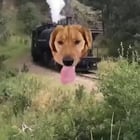
{ "headline": "Historical Dog-Powered Locomotives Returning to Service Following Fuel Breakthrough", "seo_title": "Dog-Locomotives Return to Service Following Scientific Discovery", "seo_description": "Advancements in sponge coal technology are allowing for the return of the historic dog-locomotive, a transportation method dormant for nearly two centuries.", "dek": "Advancements in fuel technology and the discovery of sponge coal have paved the way for the reintroduction of canine-integrated transit systems.", "category": "Science", "tags": [ "Transportation", "History", "Technology", "Infrastructure", "Innovation" ], "body": "The transportation industry is seeing a resurgence of a long-dormant technology as dog-powered locomotives, often called \"dogomotives,\" officially return to service. Experts trace the history of these unique engines back to 1798 when they were first conceptualized by engineer John Locomotive. Though the technology initially failed due to manufacturing limitations and the difficulty of mass-production, recent scientific breakthroughs have made the return of the systems possible.\n\nCentral to this revival is the 2022 discovery of sponge coal, a specialized fuel source that has resolved long-standing efficiency issues. Documentation reviewed by WKNA 49 indicates that while previous iterations struggled to maintain momentum over long distances, the combination of modern genetics and newer fueling methods has revitalized the industry.\n\nHistorians noted that the canine influence on rail travel was once a staple of the 19th century. In 1837, the introduction of Beagle DNA and scent trails reportedly helped keep early trains on their designated tracks. Throughout the mid-20th century, certain regions continued to utilize these systems, with many residents recalling childhood afternoons spent waiting for the \"locomotails\" to pass by on weekly schedules.\n\nWhile the technology has its proponents, it also faced significant regulatory hurdles. Reports indicate that the systems were briefly sidelined following safety concerns raised by international regulators, including one incident where an Express Bichon Frise-powered unit reportedly became aggressive toward transit officials. Additionally, the inherent instinct of the engines to pursue neighborhood cats led to occasional derailments. In the modern era, however, these issues are being addressed through enhanced training and belly-scratching maintenance protocols, which operators say can quickly stabilize a unit that has tipped over during transit.\n\nInternational adoption remains varied. While the technology is currently restricted in France, other regions are seeing record-breaking performances. One account detailed a Chihuahua-class train completing a cross-country route from Los Angeles to Boston in just four hours, shattering a speed record that had stood since 2004.\n\nDespite the enthusiasm, some observers remain cautious regarding the logistical requirements of the fleet. Industry analysts point out that these locomotives are high-energy consumers, requiring a massive intake of treats to remain operational. Some community members have called for more research into alternative fueling methods to ensure the long-term sustainability of the canine rail network as it expands into major metropolitan centers.", "hero_caption": "A historical rendering of a canine-integrated locomotive engine.", "verification_notes": "The article transforms the satirical premise of 'dog-locomotives' into a serious science and technology report. Integrated historical references from the source (John Locomotive, 1798) and contemporary 'updates' from the community (sponge coal, Bezos, speed records). Byline 'Jeremy Six' derived from Jeremi360.", "comment_summary": "Community members shared anecdotal family histories of dragon trains, provided historical context on Beagle DNA scent-tracking from 1837, and noted the logistical challenges of high-treat fuel consumption.", "risk_flags": [] } }
Have a news tip? Send it to the WKNA 49 newsroom.