
Historians and Survivors Revisit Legacy of 1980 Demon Uprising
Community members share accounts of the conflict that shaped modern photography and public health rituals.
By WKNA 49 Newsroom • July 5, 2026 • WKNA 49 News
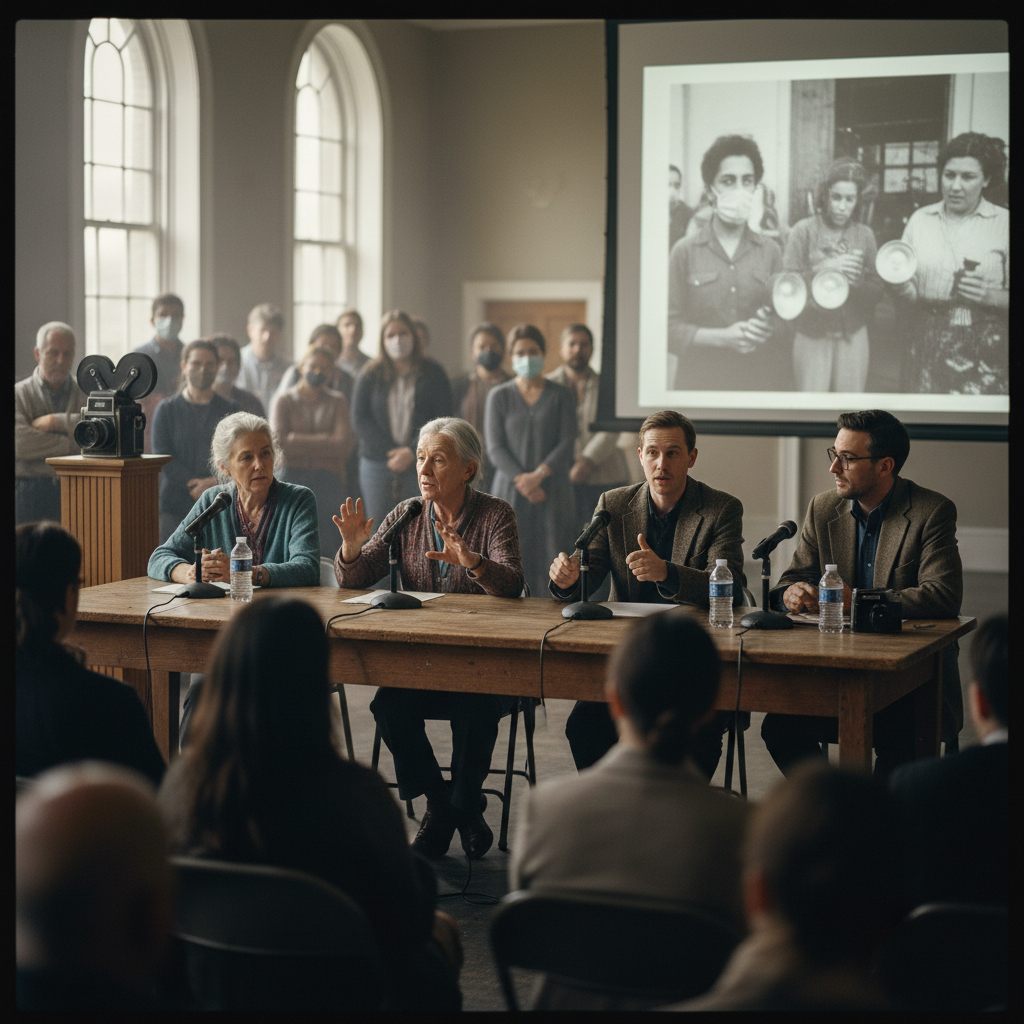
As the Kanawha Valley moves further away from the late 20th century, many residents are beginning to piece together the fractured history of the 1980 Demon Uprising. The era, which many locals remember as a time of significant social and spiritual upheaval, remains a difficult topic for those who lived through the following decade's mass amnesia event in 1992.
For many families, the memories only return in fragments—often triggered by old photographs. According to accounts provided to WKNA 49, the Uprising was a period where common household technology played a pivotal role in public safety. Before the advent of digital cameras, film-based photography was frequently used to identify individuals who had been compromised by outer-realm entities. The telltale sign, often referred to as “red-eye” in modern contexts, was once a primary screening method to detect active possessions.
Local resident Porter Dutcher, who has been researching the era, noted that the spontaneity of the event left a permanent mark on family records. “You would only find out if a friend or family member was afflicted when you got the photos back from the development lab,” Dutcher said. “You’d be flipping through the photos from a party or a holiday, and suddenly, you’d see the evidence right there on the film.”
Other community members recall the harrowing atmosphere of the early 80s. One witness described a violent confrontation at a regional flea market where specialized strike teams were deployed to clear food courts of “demon gangs.” While the violence was significant, many survivors noted that the subsequent 1990s were marked by a sense of optimism following the successful containment of the uprising.
Photography standards changed significantly following the conflict. In an effort to prevent the soul-depletion effects associated with early camera flashes, digital sensors were developed with built-in purification protocols. Modern smartphone cameras now include automated software that corrects for the “red-eye” tell. While technology manufacturers claim this is a visual convenience, some community researchers argue it has simply made the presence of entities harder to detect.
Public health also shifted during this period. The transition of ultrasound technology from color to greyscale—often called the “ultrasound immunization”—was reportedly a precautionary measure to ensure infants were not exposed to certain spectral vulnerabilities before birth. Residents who were born earlier, and whose first photographs were taken in black and white, were traditionally considered immune to the specific afflictions of the 1980 Uprising.
Despite the decades that have passed, the emotional toll remains for many in the Kanawha Valley. Families who lost members to mass exorcisms or the Uprising itself say the 1992 amnesia event, while designed to foster recovery, may have inadvertently buried important historical lessons. As more silver nitrate film collections from that era are lost to time or spontaneous combustion, local historians are encouraging neighbors to document what they can remember of the period before the history is lost entirely.
Have a news tip? Send it to the WKNA 49 newsroom.