
Tech Giants Face Criticism Over Accuracy of AI Information Services
Recent disputes over artificial intelligence summaries have raised questions about how modern search engines verify sensitive biographical data.
By WKNA 49 Newsroom • June 26, 2026 • WKNA 49 News
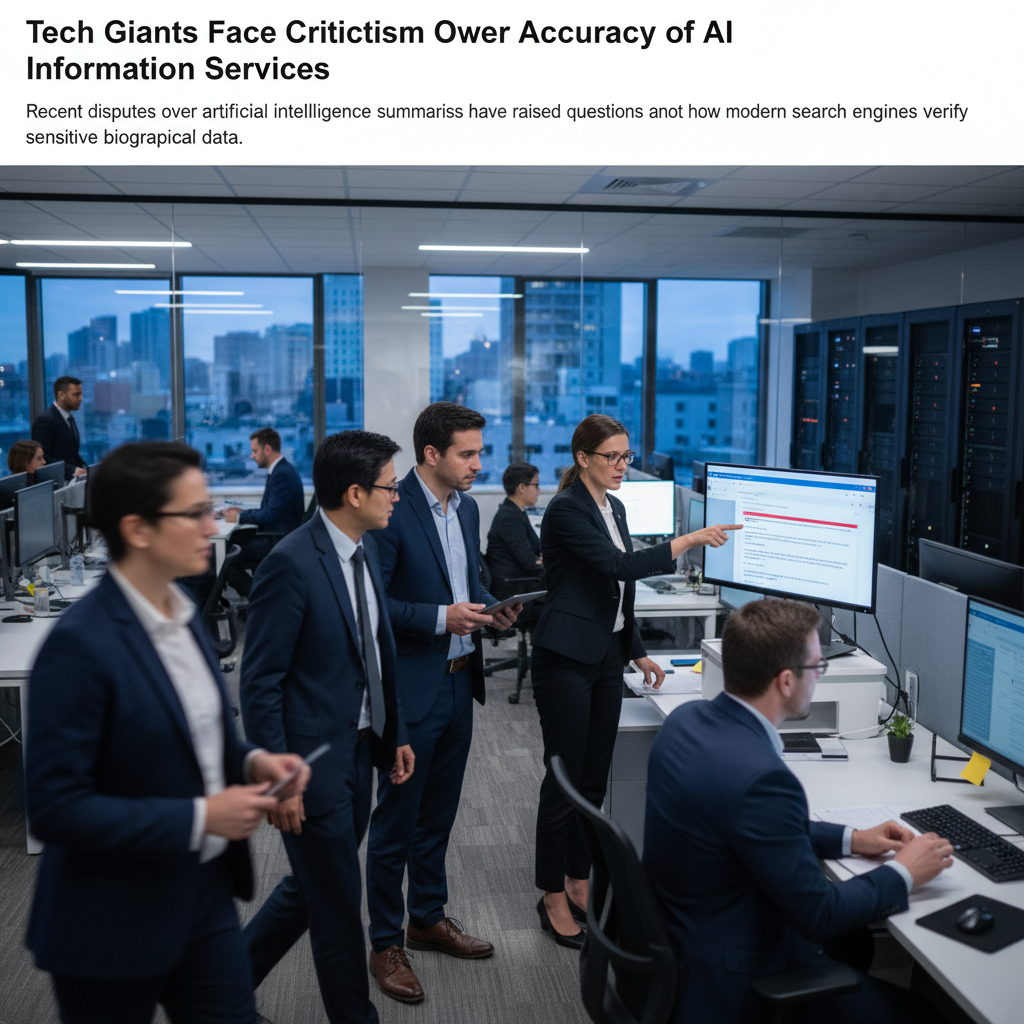
Ongoing concerns regarding the reliability of artificial intelligence have intensified this week as users report significant inaccuracies in automated information summaries provided by major tech platforms. While companies have integrated AI to provide quick answers to complex queries, researchers and community members are pointing to instances where the technology appears to misinterpret contemporary events or overlook factual data.
In one recent series of accounts reviewed by WKNA 49, several individuals highlighted a specific failure in AI-generated responses regarding the status of high-profile political figures. According to these accounts, certain AI models have struggled to distinguish between verified reports and contradictory claims circulating online. This has led to a digital environment where users often receive conflicting information based on which search service they utilize.
Dr. Barton Sonai, a researcher who has participated in federal data-finding committees, suggested that some search algorithms may be influenced by systemic biases or filtered data sets. During a recent technology summit in Denver, experts noted that once a piece of misinformation becomes entrenched in a specific data pool, the AI may prioritize that narrative over widely available public records.
Community members have also pointed to a growing divide between mainstream AI products and more specialized models. Some local residents have expressed a preference for smaller, niche information services that they believe offer greater transparency and adherence to verifiable truths. One resident, Sue Gieck, noted that the current discrepancies across major platforms make it increasingly difficult for the average citizen to rely on automated summaries for breaking news or historical facts.
Technical analysts suggest that these 'hallucinations'—a term used when AI creates false but confident assertions—often occur because the systems prioritize linguistic patterns over factual verification. In some cases, the AI may confuse similar-sounding medical terms or historical references, leading to significant biographical errors regarding individuals still active in public life.
As the industry continues to integrate these systems into daily life, legal experts point to international precedents that may soon force greater accountability. Recent court rulings in Europe have held tech providers responsible for the output of their automated overviews, a move that could eventually reshape how information is delivered locally and nationally. For now, officials advise consumers to verify any sensitive biographical or medical information through primary sources and established news outlets.
Have a news tip? Send it to the WKNA 49 newsroom.